
College of Science Media Center  


Featured Stories

Boyd Professor Susanne C. Brenner has achieved an extraordinary trio of honors: receiving the prestigious Blaise Pascal Medal, being elected to the European Academy of Sciences, and being invited to speak at the 2026 International Congress of Mathematicians—the first LSU faculty member to do so since 1970. These recognitions place Brenner among the world’s leading mathematical scientists and highlight the global impact of her research.

The LSU Mass Spectrometry Facility (MSF) and Nuclear Magnetic Resonance (NMR) Facility, key research resources at LSU, are expanding their capabilities thanks to a $69,199 enhancement grant from the Louisiana Board of Regents. This funding will improve sample preparation and add variable-temperature features for NMR, streamlining workflows and enhancing research quality.

Three LSU College of Science faculty members—Amy Xu, Sviatoslav Baranets, and Nick Mason—have been awarded the National Science Foundation’s prestigious CAREER Award. This award supports early-career faculty with the potential to serve as academic role models and lead advancements in research and education. NSF’s most competitive grant for junior faculty, the CAREER Program, provides five years of funding to establish a strong foundation for a lifetime of leadership, furthering LSU’s mission of innovation and scientific excellence.

Research news

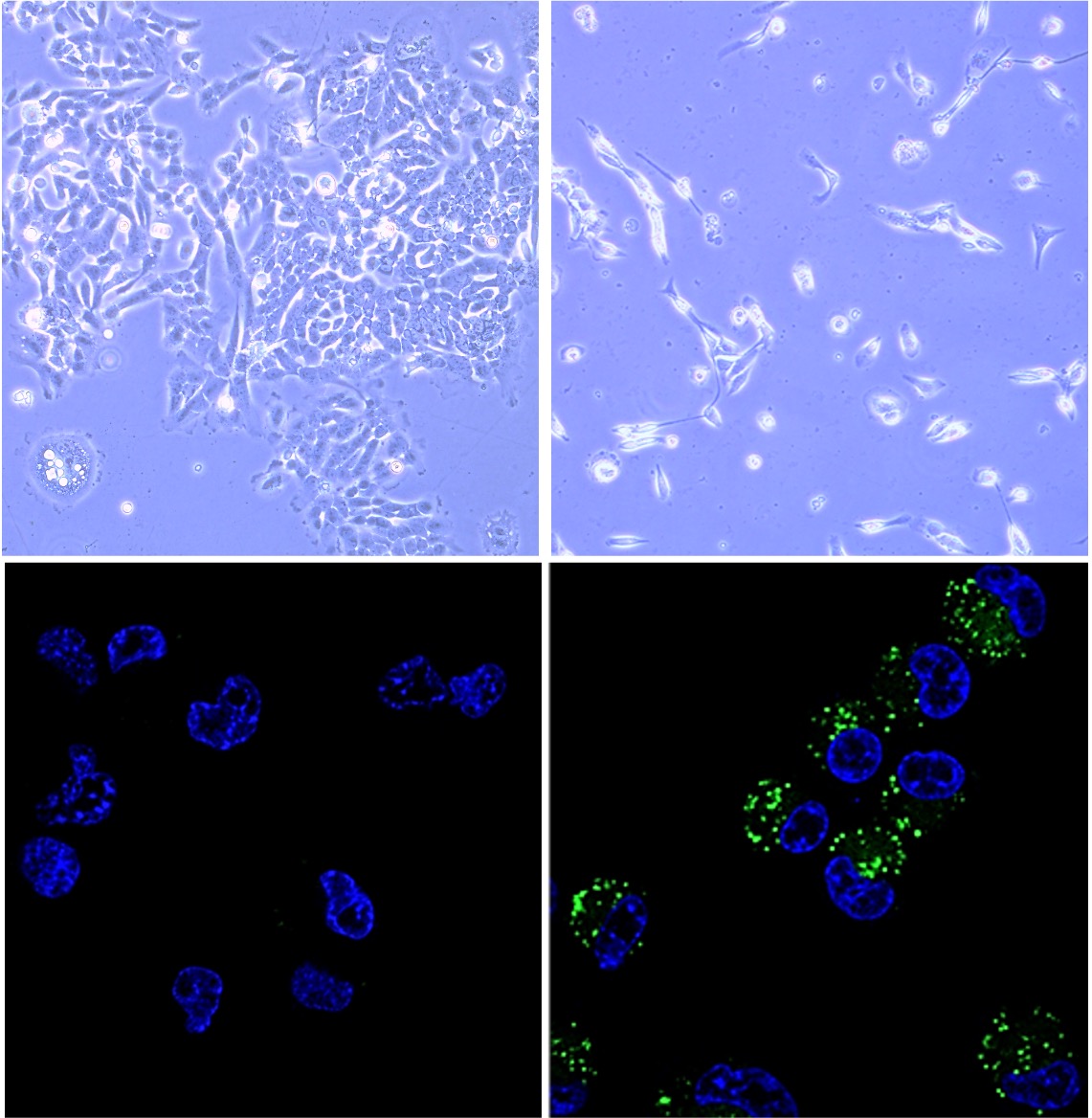
Researchers from Ohio State University and LSU have shown that high-harmonic spectroscopy (HHS)—a laser technique fast enough to track electrons on attosecond timescales—can finally be used to study liquids. In a study published in PNAS, the team found that fluorobenzene forms a surprising local structure when mixed with methanol, dramatically changing the emitted light. The work opens a new window into ultrafast interactions inside liquids, where many essential chemical and biological processes take place.

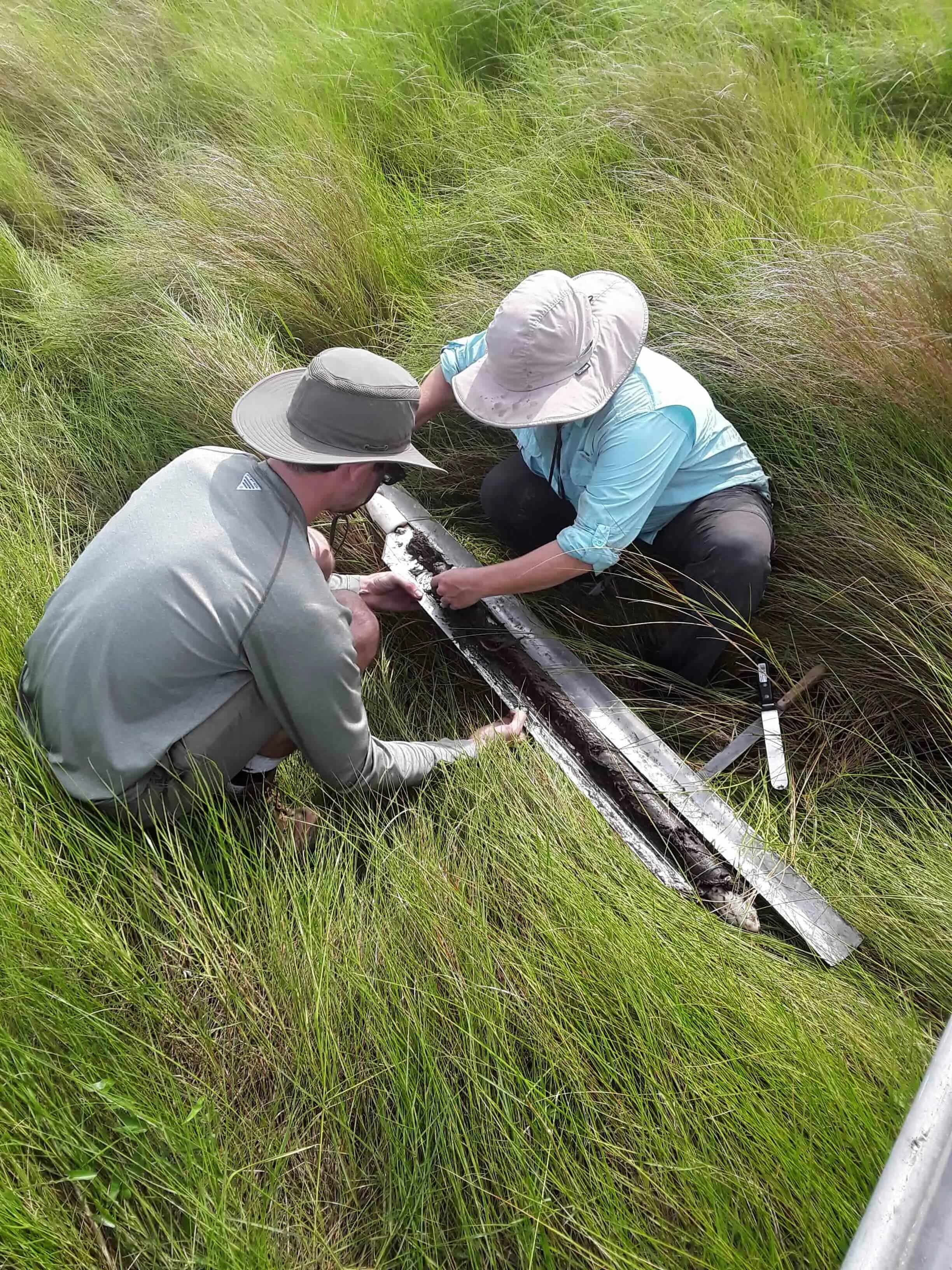
As climate change drives ocean acidification, most corals struggle to survive–but Porites panamensis in Mexico's Gulf of California is rewriting the rules. LSU Department of Biological Sciences Professor Michael Hellberg is uncovering how this resilient coral thrives in CO₂-rich, low-pH waters that would kill most species. The work explores the surprising role of sex differences in survival, revealing that male and female corals respond differently to acid stress. By combining genomics, field research, and AI-based coral sex identification, the team is decoding the genetic and physiological strategies that may help corals adapt to a rapidly acidifying ocean.

Scientists have, for the first time, directly observed a subduction zone actively breaking apart. Off Vancouver Island, where the Cascadia Subduction Zone lies, seismic imaging and earthquake records from the CASCADIA Seismic Imaging Experiment reveal that the Juan de Fuca and Explorer Plates are slowly tearing away beneath the North American Plate. Instead of shutting down all at once, the subduction zone appears to be dying in a gradual, piece-by-piece process. This “scissor-like” termination helps explain puzzling remnants of ancient plates and refines models of long-term tectonic evolution.

Science Next Blog

The LSU Museum of Natural Science’s new Naturally Talented Program, launched by Outreach Coordinator Irene Marti Gil, brings together art, science, and the humanities to inspire student creativity and connection with the natural world. Through free workshops, the Poet’s Corner exhibition space, and an annual creative award, students can explore everything from nature journaling and gyotaku to jewelry-making and botanical illustration. By blending scientific observation with artistic expression, the program fosters community, personal growth, and a richer campus culture, offering pathways for students to discover and share their talents.

Tailenn Fungcharoen-McCray is a dedicated STEM educator addressing Louisiana’s teacher shortage. Through LSU’s GeauxTeach program and the Marjorie Lee Browne STEM Fellowship, she developed classroom expertise, mentorship skills, and a student-centered teaching philosophy. Committed to equity and representation, Tailenn inspires curiosity, high expectations, and confidence in her students, empowering them to see themselves as capable mathematicians and scientists.

Parking may seem like a mundane frustration until you’re circling a packed lot, running late, and wondering why no one has solved this yet. At LSU, Associate Professor of Physics & Astronomy Dr. Manos Chatzopoulos is tackling that very problem by turning his astrophysics expertise into practical technology. Using the same computational tools he applies to simulate massive cosmic explosions, Chatzopoulos co-founded ParkZen, a smartphone-based app that helps people find available parking spaces in real time—no infrastructure required.