

John Vickers Intends to “Do Big Things” with Digital Twins at LSU
April 06, 2026
A conversation with John Vickers, formerly with NASA, who just signed on as the inaugural director of LSU’s new digital twin core facility. He isn’t shy about his belief in digital twins to transform the nature of work, the workforce, and the workplace.
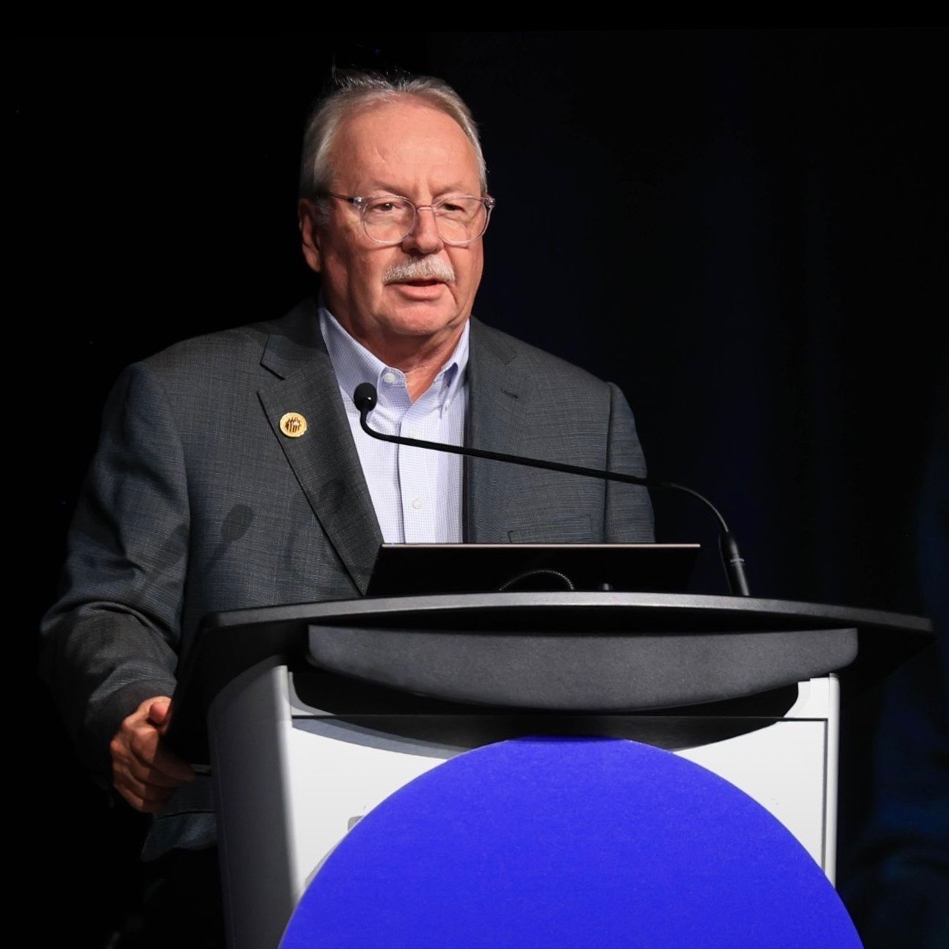
John Vickers brings 40 years of experience with NASA to lead the new digital twin core facility at LSU.
At NASA, Vickers was the principal technologist for advanced manufacturing in the Space Technology Mission Directorate, the senior leader for advanced manufacturing at Marshall Space Flight Center, and the director of their National Center for Advanced Manufacturing. As part of that work, he led the agency’s digital twin research and development strategy to push technological boundaries and advance NASA’s mission to explore the universe and inspire the world. Now, he will lead LSU’s digital twin core facility and serve as the university’s representative to the Huntsville, Alabama, collaborative research ecosystem and business community.
Welcome to the team, John Vickers. Why did you choose to join LSU as the inaugural director of the new digital twin core facility?
When I decided to move on from NASA, retirement was not part of my vocabulary. I was looking to make a leap, and LSU is just an extremely exciting place. It’s an honor to be at LSU.
I’ve had a long relationship with LSU—I’ve worked with the university for many years from the NASA side, including with my friend Bob Fudickar, executive director of LSU’s National Center for Advanced Manufacturing (NCAM), which provides the equipment, much of the workforce, and more to build the rockets at NASA’s Michoud Assembly Facility in New Orleans. The NCAM was originally the idea of NASA administrator Dan Goldin, and I was asked to create it. The name was my idea, and it has endured for more than 25 years. I guess I have a knack for names.
“Coming from NASA where the goals and expectations are as big as the universe, LSU has that same feeling of the highest levels of excellence, imagination, and inspiration.”
John Vickers
A big part of my reason for joining LSU was Vice Chancellor of Research & Economic Development Robert Twilley’s vision to make LSU the national epicenter of digital twin research, education, and technology. While a lot of universities do digital twin work, I’d never heard anybody quite put it that way. LSU’s Digital Twin Core Facility is intended to be a campus-wide, interdisciplinary capability. We are solving complex problems and working at the frontier of what’s possible.
It’s also about the passion from the extraordinary faculty, staff, and students—people and relationships are the key to success. LSU being a land-grant, sea-grant, and space-grant institution, that’s a big deal. Leadership means everything, and meeting the LSU President and Chancellor, I appreciated their aspirations to do big things.
So, that’s what brought me here, and what greater opportunity could there be? Not anywhere else, I’ll tell you that.
You coined the term “digital twin” about 15 years ago, is that right?
Yes, the terminology came from an exercise I was leading for NASA, to develop a technology road map for all of NASA for materials, structures, and manufacturing. This would have been around 2010. That road map was intended for NASA internally, but it was being produced by the National Academies, and we had to give presentations to them about it. We came up with ways to describe the approaches we were going to take, so we used all kinds of different names to describe what we were doing, and none of them very cool. They were long, technical names with cumbersome acronyms. That’s when we came up with “digital twins,” but I'll be honest with you, not everyone on the team liked it. But when I took it to my colleague Dr. Michael Grieves, it became a eureka moment. He was working in modeling and simulation for advanced manufacturing, same as I, and agreed it perfectly described what we were trying to do.
While the 2010 roadmap was the catalyst for mainstream technical use in aerospace, the work with Michael Grieves helped bridge the gap between NASA’s specific engineering needs and the broader world conceptual model. More than anything else, I believe the explosion of growth in digital twins today can be traced to the work we have done together.
The digital twin approach—the idea of creating a virtual replica of something real, whether an environment, a process, or a person, and then being able to run tests or use it to monitor what’s happening in the real world—is still new. Do you feel there are any common misconceptions about digital twins?
My perspective on digital twins is that they can make the most complex, multidimensional, dynamic problems understandable—and more than that, come alive in a comprehensive reality. Even in smart places like universities, people have different perceptions about what digital twins are and what they do. It’s also hard to get a group of people to agree on a definition. The National Academies’ 2024 report says a digital twin is a set of virtual information constructs that mimics a natural, engineered, or social system.
When I speak about digital twins, and I do quite often, I make a point of explaining how digital twins depend on their purpose. An agricultural system is very different from an aerospace system or a chemical system or a weather system, for example. But at its core is that computational model or representation. It can be used for simulations and predictions, usually to improve an operational capability.
“Definitions are hard to agree on. I once wrote a digital twin definition and sent it to one of the big dictionaries—Webster’s, probably—and they rejected it.”
John Vickers
You can think of the computer in your car as a digital twin. It takes in a lot of data from different sensors, and it changes the car’s performance based on that information. But I believe you don’t have to have that feedback loop, and this is where I disagree with the National Academies. They say a digital twin “is dynamically updated with data from its physical counterpart, possesses predictive capability, and enables bidirectional interaction to inform decisions that realize value.” They use the bidirectionality as a litmus test, and I disagree wholeheartedly—and I do believe I have some standing to give an opinion…
As an example, you can create digital twins of business practices and other non-physical things that don’t have a physical sensor to “talk back” but still offer immense predictive value.
What are you the most excited about when it comes to digital twins in the near future?
Broader application, in entirely new areas. Expanding the possible! I’m a big Disney fan, Walt Disney said “Imagineering is the blending of creative imagination and technical knowhow.” That’s very close to what we’re doing with digital twins.
Digital twins help us make decisions and predictions, but we’re actually trying to get one step ahead of the future, which is hard to get your mind around sometimes. It’s about “what if” stories that describe different ways the future might unfold—. It’s exciting stuff.
We are living in a time of fast-paced digital transformation and digital twins are essential to understanding the chaos and seeing the big picture.
We can do advanced things in manufacturing and engineering where we’re replacing physical testing with digital testing. But I’ll tell you what’s hard to digitally twin—social systems and natural systems. People. I only recently learned about the work LSU is doing in sports and exercise, developing digital twins of athletes. I love that. I’m meeting so many smart, talented people at LSU.
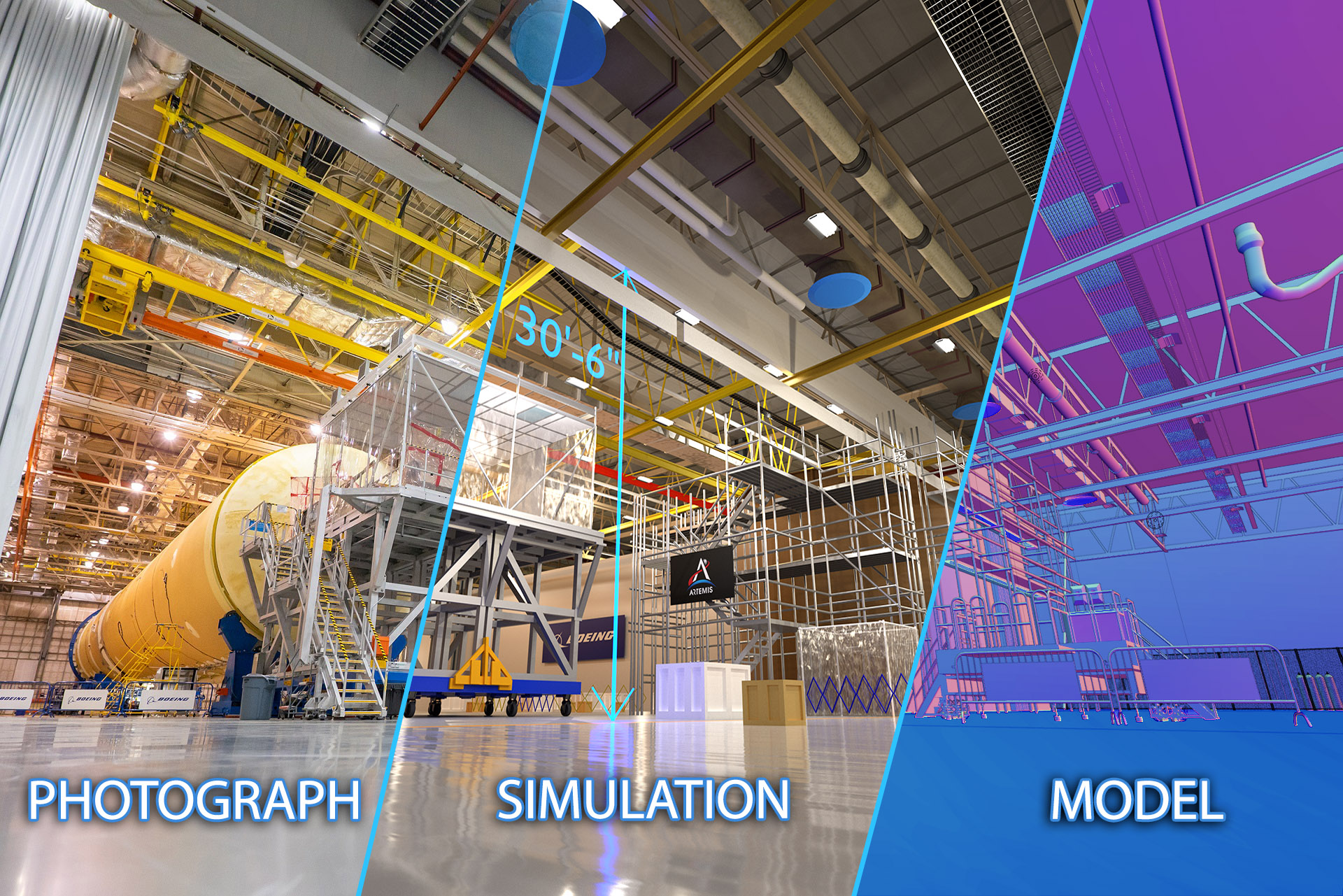
The National Science Foundation recently chose to highlight LSU’s work to create a digital twin of NASA’s Michoud Assembly Facility in New Orleans, where the Artemis rockets are being built, to illustrate illustrate Digital Twins: Virtual models with real-world impacts (see link under Read More at the end of this article).
What do you see as the biggest challenges in developing and implementing digital twins?
I don’t worry too much about barriers. Most of us work on problems that are solvable and that’s 90% of what we’ll do with digital twins. However, there are those world-class physicists, biologists, and engineers working on problems that are not solvable—not yet, anyway, and digital twins are helping them too. That’s the nature of almost every challenge.
At NASA, my goals were around human exploration, research, and science. LSU has its own set of goals. One of my first jobs is to develop a strategic plan for this new core facility that I’ve been charged with, so we can contribute effectively to LSU’s mission and serve as an engine of economic growth for Louisiana and the region.
Do you have any golden rules you live and lead by?
Smart things happen where smart people are.
LSU is such a special place, the energy around it. You know, back in my NASA job, I had one thing written at the top of my whiteboard, “Do big things.” We’re going to do big things here at LSU. We’re going to focus on how we can live, work, and learn better. I think collaboration and partnering are secret sauces. LSU just signed partnership agreements with Oak Ridge and Argonne National labs. I believe partnerships are where extraordinary things happen.
LSU brings the leadership and the excitement factor. I’m just thrilled to be here.
Now, how about this trip around the Moon we’re currently on, thanks to NASA and in some ways also to LSU, since LSU equipment was used to build the Artemis rockets and LSU’s digital twin team has worked to build a digital twin of the Michoud Assembly Facility in New Orleans, where those rockets are built?
It’s a profound “full circle” moment for me. At NASA, my focus was on the technology required to send people safely to the Moon. Now at LSU, we are using our expertise to digitally twin the very birthplace of those Artemis rockets, the Michoud Assembly Facility.
Digital twins will be critical to the future of Michoud as it expands, adapts to new missions, and supports commercial production. It serves as an enabling layer that supports rapid reconfiguration, validation, and integration of new capabilities. By creating a digital twin of the factory itself, we aren’t just building hardware—we are transforming Michoud to be a factory of the future: adaptable, faster, better, and cheaper. It’s the ultimate example of doing big things.
We like to say the road to the Moon goes through Louisiana, and now we’re ensuring LSU’s knowhow helps power the next generation of space exploration and explorers.
Read More
Digital Twins: Virtual models with real-world impacts (National Science Foundation)