
LSU collaborates with Pennington to change sports science.
SOK faculty Neil Johannsen works with Pennington Biomedical Research Center and LSU Athletics to elevate athletic performance and safety.
The School of Kinesiology features more than 15 research laboratories and wellness spaces. Through their academic journey, students will have the opportunity to engage in groundbreaking research, using state-of-the-art equipment and technology. With a focus on excellence and real-world impact, these spaces allow our faculty to lead pioneering investigations with far-reaching impacts.
The faculty members of the LSU Athletic Training program, including Dr. Amanda Benson, Dr. Rebecca Hirschhorn, and Dr. Kirsten Cunha, are deeply committed to advancing the field through rigorous research initiatives. Rooted in the program is a dedication to providing students with hands-on research experiences in line with CAATE and BOC accreditation standards. Dr. Amanda Benson, the Program Director, not only spearheads her role but also actively contributes to the athletic training profession, offering medical coverage for events such as the Walt Disney Marathons and earning accolades for her outstanding teaching and service contributions.
Dr. Rebecca Hirschhorn, leveraging extensive clinical athletic training experience, conducts impactful research focused on physiological monitoring and exertional heat illnesses in tactical athlete populations. Her commitment extends beyond academia, holding certifications as an Advanced EMT and actively participating in national organizations like the National Athletic Trainers’ Association and the American Public Health Association. Dr. Kirsten Cunha enriches the program with her diverse experiences in professional and collegiate athletics. She supports LSU Athletics teams as an ad hoc AT and provides AT services through Baton Rouge Orthopaedic Clinic for local high school events.
As core faculty members, their dynamic engagement not only imparts invaluable knowledge to students but actively contributes to the growth and enhancement of the athletic training field through impactful research pursuits.
Learn more about this program.
The LSU School of Kinesiology Social & Behavioral Sciences research program dedicates itself to promoting health and wellbeing in local, state, national, and international populations. Research conducted in the Social & Behavioral Sciences Laboratories aims to create interventions and discover translational solutions that optimize quality of life across the lifespan. We strive to address health issues by establishing meaningful partnerships with schools, government agencies, local citizens, nonprofit organizations, and community businesses. The Social & Behavioral Sciences research area includes three collaborative laboratories to achieve its missions.
Director: Shiyu Li, PhD
The Health And Behavioral Intervention Technologies (HABIT) Lab focuses on promoting lasting lifestyle behavior change to improve health. Specifically, we (1) leverage digital technologies to deliver scalable, evidence-based behavioral interventions, (2) study the mechanisms that make behavior change work, and (3) conduct nationwide research to reach diverse communities. The HABIT lab also supports and mentors students interested in behavioral science and health technology through hands-on clinical research experiences.
Director: Ryan Hulteen, PhD
A prerequisite for living an active, healthy lifestyle is developing the skill competencies to participate in a wide array of activities (e.g., run, throw, rising from your seat). Across the lifespan, the skills we use or require changes, thus the goal of the M-SAIL is to better understand when skill development occurs and what can be done about these changes. This work is done from both a measurement and intervention perspective. We strive to identify skill deficiencies efficiently and quickly, then implement interventions to improve skill competencies. The long-term goal of our work is to create feasible, translatable programs and environments which cultivate physical health and motor skill development. Previous work in this lab has led to interventions which promote leadership and skill development in elementary school students, promoting physically active physical education for adolescents, or providing online, virtually delivered classes to older adults during the COVID-19 pandemic. Success in our lab means seeing individuals live healthy, independent lives regardless of their age.
Director: Senlin Chen, PhD
The PK Lab is focused on examining factors contributing to K-12 students’ competence and confidence related to life-time physical activity and wellness. Many factors may facilitate or hinder students’ learning both in and out of the schools: curriculum, environment and context, teacher, pedagogy, resources, personal attributes and characteristics, as well as broader sociocultural conditions. As a result, a major emphasis of the projects within the PK Lab has been on the developing and testing of theory-driven curriculum and programming interventions to advance healthful-living in youth. To achieve this, the PK Lab has been involved in multiple funded, interdisciplinary intervention projects. With support from the NIH, USDA, SHAPE, and other grant sources, the PK Lab has successfully developed several evidence-based interventions (i.e., SWITCH PE, SWITCH-MS, HIIT PE 1.0, & HIIT PE 2.0). These interventions were field-tested in thousands of students from dozens of schools. In the first decade of its history, the PK Lab has produced over 60 research papers and 100 presentations. It is equipped with four data processing workstations and a variety of equipment and resources needed to carry the missions of research and instruction in pedagogical kinesiology. The PK Lab has involved numerous graduate and undergraduate students in research and independent studies, which has contributed to the research intensive atmosphere of the School of Kinesiology.
Director: John Nauright
We seek to be a national and global leader in research and outreach supporting the needs and opportunities for girls and women in sport and health for Louisiana and the world. Creating and sharing knowledge to support female athletes and physical activity for girls and women is our raison d'être. Based at LSU in the School of Kinesiology, we are part of a group of labs and partners focused on improving the sporting opportunities and health outcomes for girls and women, and, therefore, for society as a whole.
WHAT WE DO
Translate our world-class cutting-edge research on women's sport and health across
the lifespan for the wider public.
Educate and advocate for the needs of girls and women in sport, fitness, and health
that are unique to their biological and social needs.
Create opportunities for more girls and women to participate in movement-based activities
(sport/physical activity/exercise/fitness).
Support the development of girls' and women's sport and health around the world.
Empower the next generation of coaches and administrators in sport.
Examine social, psychological and physical barriers to participation and success.
We include all people who seek to understand the unique needs of girls and women who are not small men but have unique health and performance issues because of the differences in male and female biology. Our research teams include men and women who are researching on key issues impacting women's health and sporting performance including menstrual health, the impact of motherhood, and safe environments for girls and women.
Director: Jaclyn Hadfield, PhD
The Women’s Exercise Culture and Behavior Lab produces research focused on finding meaning in the relationship between social, cultural, and behavioral factors with health beliefs and behaviors among women. The lab primarily explores the relationship of health beliefs within physical activity/exercise/fitness behaviors using theory-based methods with a translational and community-based approach. The purpose of the lab’s research agenda is to create preventative health lifestyles for women to enhance overall well-being and bridge gender health inequity gaps domestically and globally. Even though the primary research focus lies within women’s movement behaviors, the innovative mixed methodologies used in the lab permeate into other areas that impact health, which invites collaborative and interdisciplinary scholarship opportunities. Studies in the lab investigate the impact messaging has on women's physical activity engagement, beliefs women have about moving their bodies, addressing racial-ethnic differences in women’s physical activity beliefs/behaviors, and cross-cultural differences in fitness programming. The lab produces multilingual (English/Spanish/Italian) research to uncover salient health determinants that address the unique needs of women to live healthy and active lives across the lifespan while bettering exercise culture in Louisiana, and beyond.
Directors: Guillaume Spielmann, PhD and Brian Irving, PhD
The IBL hosts federally-funded research aimed at harvesting the benefits of acute and chronic exercise to improve muscle, immune and whole-body metabolism to reduce the risk for muscle loss, frailty and mortality in older adults using safe, economical and efficient non-pharmaceutical therapeutic approaches. Other research projects focus on using exercise as an adjuvant for cancer immunotherapy, and to improve immune response to breast cancer cells. In addition, researchers in the IBL study the effects of stress and spaceflight on immune function with, for the first time at LSU, an ongoing research project assessing the impact of 1-year mission in the International Space Station on the immune function of astronauts.
Another fascinating area of research in our labs includes the isolation, quantification, and characterization of exosomes, small particles that are released into the blood from tissues (e.g., skeletal muscle) and help coordinate tissue to tissue signaling (e.g., skeletal muscle to liver).
Director: Neil Johannsen, PhD and Brian Irving, PhD
Equipped with state-of-the-art equipment to measure body composition (including Dual-energy X-ray Absorptiometry imaging, 3D body scanners, and electrical bioimpedance analysis scales). The BCL operates in close collaboration with LSU Athletics and the Pennington Biomedical Research Center. Research conducted in the BCL helps track changes in muscle mass and bone density in all LSU athletes in response to training, thus providing them with an unmatched competitive edge over their competitors. The BCL also tracks change in muscle mass and bone density in older adults at risk for chronic diseases to identify and test novel therapies to reduce frailty and improve bone mineral density in the elderly.
Director: Neil Johannsen, PhD
The Environmental Chamber at LSU enables research to be conducted on the effects of sustained heat and humidity on cardiovascular function and performance in athletes and military personnel. Furthermore, the Environmental Chamber is used to design effective countermeasures to heat-stress to be used by collegiate and tactical athletes (rapid cooling of extremities etc…) exposed to extreme environments.
Director: Efthymios "Makis" Papadopoulos, PhD
The skeletal muscle is an organ with important metabolic functions beyond locomotion, contributing to overall health. Therefore, its preservation becomes increasingly important with aging. Cancer and its treatment negatively affect muscle mass, muscle quality, and function, increasing the risk of adverse outcomes and reducing quality of life, particularly among older patients.
The Exercise Oncology & Muscle Aging Lab focuses on three primary areas: i) elucidating the role of skeletal muscle health in predicting clinical outcomes among patients undergoing cancer surgery and systemic therapy; ii) identifying targeted strategies to improve muscle mass, quality, and function before, during, and after cancer treatment; and iii) developing individualized prehabilitation interventions aimed at improving postoperative outcomes in patients undergoing cancer surgery. Collectively, research at the Exercise Oncology & Muscle Aging Lab aims to inform treatment personalization, improve cancer treatment outcomes, and enhance quality of life for patients.
Directors: Heather Allaway, PhD; Neil Johannsen, PhD; Brian Irving, PhD; and Guillaume Spielmann, PhD
The Exercise Testing Laboratory is equipped with a myriad of equipment to assess the physiological response to exercise in individuals ranging from sedentary to recreational and elite athletes (Aerobic Fitness, EKG, Metabolic Rate etc.). In addition to promoting exercise physiology research, the ETL is used for undergraduate and graduate hands-on instruction, providing LSU students with valuable real-world experience.
Director: Heather Allaway, PhD
The SBL contains a myriad of equipment to explore the integrative physiology of the skeleton. The SBL equipment is used to prepare and analyze human and animal skeletal tissue samples at the cellular level and in conjunction with the IBL, VML, BCL, and the micro-computed tomography lab and histology preparation facility at the School of Veterinary Medicine assist in fully explaining the observed skeletal responses. Serum samples analyzed in the IBL can be incorporated into the data gathered with the equipment in the SBL to provide a more complete picture of the integrative physiology of the skeleton. In conjunction with the IBL and BCL, the SBL can be used to test novel therapies to reduce frailty and improve skeletal health in multiple populations
Director: Xavier Thompson, PhD, ATC
The Sports Therapy Rehabilitation Injury Prevention and Exercise Science (STRIPES) Lab is dedicated to advancing research focused on sports related injury, rehabilitation, and performance. The lab investigates factors that influence recovery and performance across a wide spectrum of athletic populations including elite, recreational, youth, and tactical athletes. Research projects in the STRIPES Lab focus on injury prevention and rehabilitation, biomechanics and muscular traits relevant to athletic performance and recovery. The lab’s goal is to generate clinically meaningful insights to inform best practices in sports medicine and sports science.
Director: Brian Irving, PhD
The VML has established state-of-the-art non-invasive methods to measure in vivo vascular function (e.g., ultra-sonography, pulse wave velocity) and muscle metabolism (near-infrared spectroscopy). These groundbreaking techniques enable the collection of novel data on muscle and circulatory health, without the need for expensive and invasive clinical procedures. Ongoing projects include assessing the short-term impact of blood flow restricted (BFR) resistance exercise on skeletal muscle metabolism and assessing whether BFR combined with neuromuscular stimulation can prevent the disuse atrophy. Research in the VML also examines the alterations in vascular function and central blood pressure responses to acute and chronic exercise in young and older adults and those with vascular diseases including hypertension and diabetes.
Director: Heather Allaway, PhD
The WPRL conducts research aimed at maximizing the health of women across the lifespan on Earth and in space. Research projects in the lab focus on how physiological and psychological stressors (e.g., exercise, diet, hormonal contraception) lead to perturbations in reproductive function and the impact altered reproductive function has on other critical physiologic systems (e.g., musculoskeletal, immune, cardiovascular) and athletic performance. Researchers in the WPRL are trained to develop scientific studies to assess physiologic responses in a clinical and basic science manner. Depending on the study, research at the WPRL involves working with both human and animal research participants to understand all factors associated with the physiologic response.
The research conducted in the WPRL utilizes the techniques and equipment of the six research laboratory spaces in a complementary manner to explore the whole-body physiologic responses of women within different studies. Additionally, we work with other research groups within the School of Kinesiology to highlight gender differences in research studies and expand the inclusion of women in research as study participants. We are actively working to develop collaborations and connections within LSU and the community to expand the research of the WPRL to include transgender and non-binary persons and make LSU a leader in research involving all aspects of gender differences research.
Director: Jaclyn Hadfield, PhD
The Women’s Exercise Culture and Behavior Lab produces research focused on finding meaning in the relationship between social, cultural, and behavioral factors with health beliefs and behaviors among women. The lab primarily explores the relationship of health beliefs within physical activity/exercise/fitness behaviors using theory-based methods with a translational and community-based approach. The purpose of the lab’s research agenda is to create preventative health lifestyles for women to enhance overall well-being and bridge gender health inequity gaps domestically and globally. Even though the primary research focus lies within women’s movement behaviors, the innovative mixed methodologies used in the lab permeate into other areas that impact health, which invites collaborative and interdisciplinary scholarship opportunities. Studies in the lab investigate the impact messaging has on women's physical activity engagement, beliefs women have about moving their bodies, addressing racial-ethnic differences in women’s physical activity beliefs/behaviors, and cross-cultural differences in fitness programming. The lab produces multilingual (English/Spanish/Italian) research to uncover salient health determinants that address the unique needs of women to live healthy and active lives across the lifespan while bettering exercise culture in Louisiana, and beyond.
With a primary focus on research centered on the learning and execution of coordinated movement, the Motor Behavior faculty at LSU plays a pivotal role in comprehending, sustaining, and elevating the well-being of individuals across the lifespan. Aligned with LSU’s One Health initiative, the Motor Behavior Research Program actively engages with individuals of diverse age groups, ranging from healthy individuals to those confronting neurological deficits due to natural aging, injury, and disease. This commitment underscores our faculty's dedication to positively impacting the health and well-being of citizens in Louisiana and beyond. Furthermore, our research initiatives serve a dual purpose by equipping students with practical experience, preparing them for prospective careers as practitioners, researchers, and scholars.
Director: Arend Van Gemmert, PhD
The FMCL researchers focus on how individuals are able to perform and (re)learn everyday manual tasks, like drawing, handwriting, pointing, and grasping objects. Although these tasks are performed seemingly effortless, challenges to the individual’s motor system as result of cognitive, environmental, and/or physiologic stress may diminish the efficiency of movements needed to perform these tasks. Furthermore, these challenges may get exacerbated as result of physiologic deterioration due to advanced age, neurological disease, and/or trauma. In addition, the FMCL aims to understand motor learning to enhance protocols and treatments to alleviate some of the challenges to the motor system as result of fore mentioned factors and to improve motor task performance in general.
Current projects include learning to adapt movement control in novel environments, practice protocol to enhance batting efficiency in baseball, and the use of a novel device to improve movement control of individuals with essential tremor.
The Growing Brains & Moving Bodies Lab (GBMB) uses advanced motion tracking systems, behavioral coding, and neuroimaging tools—such as functional Near-Infrared Spectroscopy (fNIRS)—to study neurodevelopmental trajectories in children with and without developmental disorders. The lab also develops parent education and creative movement interventions, incorporating yoga, dance, and music activities, to promote children’s social and motor development and enhance family well-being. Our goal is to identify behavioral and neurobiomarkers that support the early identification of children with developmental disorders and to provide tailored interventions for children and families in need.
The Human Development & Daily Life (HuDDL) Lab is a research lab interested in how neurodivergent and neurotypical people develop. Specifically, we are interested in how complex relationships between motor, sensory, and cognitive processes impact the performance of activities of daily living, such as feeding, dressing, and playing games in neurotypical and neurodivergent development, especially autistic development. We want to use our research findings to improve the lives of neurodivergent people by adapting their environments and providing support for them to achieve their goals.
The Motor Neuroscience Laboratory researches how our nervous system controls our body. Specifically, how our brain changes when learning new skills, how the brain makes decisions when we are moving, and how neurological disease impacts our ability to learn and perform new skills. To address these questions, we utilize behavioral assessments and neurophysiological techniques. The long-term goal of our research is to inform and develop rehabilitation approaches to improve the quality of life for those suffering from neurological diseases such as Parkinson’s and Alzheimer’s.
Musculoskeletal & Human Motion Lab conducts research to enhance our understanding of musculoskeletal disorders and to develop preventative measures for individuals with impact-related injuries during sports. Currently, we are investigating the feasibility of identifying high-risk individuals with patella tendinopathy and providing evidence-based knowledge for enhancing personalized prevention strategies at the muscle-specific level, in a timely and cost-effective manner. Our research employs a diverse range of experimental and computational techniques, such as 3D motion analysis, computational modeling, Inertial Measurement Units (IMUs), and a freehand 3D ultrasound system (3DUS).
The ability to coordinate movements is essential to the human experience. Whether young or experienced, the abilities to work, play, and live require control of various parts of the body. Researchers in this lab study motor control and sensorimotor which involve the movement of multiple body segments, including the eyes, upper limbs, and lower limbs, with an emphasis on tasks requiring whole body movements. Studies involve the effects of gaze direction, sensory alterations, sensory cueing, fatigue, exoskeleton use, or neurodegeneration on movements of the body. The results of the experiments are used to identify coordination strategies of healthy people and contribute to the basic understanding of sensory use and movement variations effects on movement control. Such information is used to improve training regimes or expand rehabilitation strategies for individuals with deficits due to normal aging or pathology such as vestibular loss, peripheral neuropathy, and Parkinson’s disease.
The LSU Sport Management program boasts a dynamic faculty committed to cutting-edge research and professional service, exemplifying a dedication to advancing the field. Led by accomplished researchers Drs. Chad Seifried, Michael Martinez, Per Svensson, Yizhou Qian, Claire Zvosec, and Brent Oja, the program encompasses diverse research areas, including facility management, human resource management, positive organizational behavior, nonprofit management, and new media in sports consumption. Recent publications by the faculty demonstrate their active engagement and scholarly contributions to sport management literature through publication in many highly-ranked journals like the Journal of Sport Management, Sport Management Review, and European Sport Management Quarterly, among others. Furthermore, the Sport Management faculty members actively participate in conferences globally, sharing their expertise and research findings at scholarly meetings such as those offered by the Academy of Management, Sport Management Association of Australia and New Zealand, the European Association of Sport Management, and the North American Society for Sport Management. The faculty's commitment extends beyond academia, as evident in their professional service, editorial board appointments, and leadership roles in conferences and committees. Finally, many of our faculty members received research fellow awards from various academic communities for their scholarly achievements.
Learn more about this program.
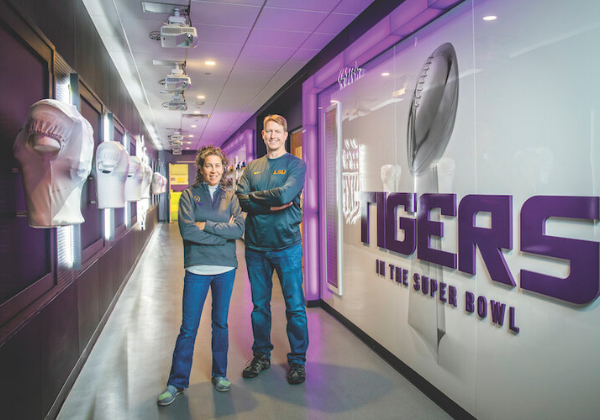
SOK faculty Neil Johannsen works with Pennington Biomedical Research Center and LSU Athletics to elevate athletic performance and safety.
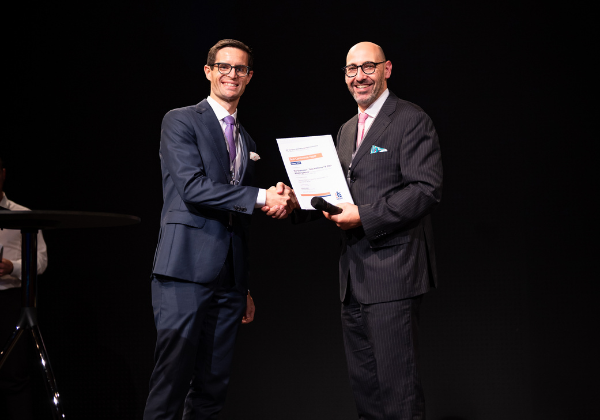
School of Kinesiology's Dr. Per Svensson Honored with EASM's Best Research Paper Award for Innovative Study on Decision-Making in Sport for Development and Peace.
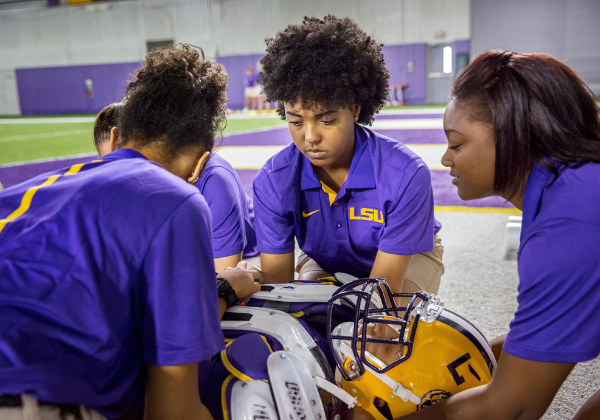
Dr. Rebecca Hirschhorn's Research at LSU Unveils the Impact of Athletic Trainer Services on Emergency Responses for Sport-Related Injuries.